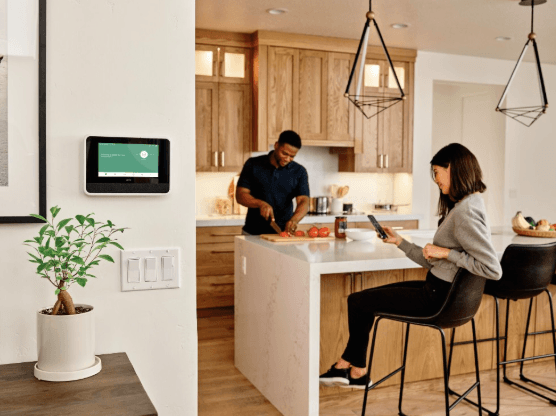
Future trends in smart home design center on privacy-first interoperability and edge-powered autonomy. Systems are expected to orchestrate cross-device interactions through modular platforms that minimize data exposure. AI will drive energy efficiency and comfort by translating real-time sensing into anticipatory controls. Ambient sensing ecosystems will enable seamless adaptation without overt interfaces. Data-informed governance will reveal tradeoffs clearly, fostering trust. The evolution hints at resilient homes where passive hubs fade into transparent data streams, inviting further exploration.
What Trends Are Redefining Smart Home Design
The evolution of smart home design is increasingly guided by interoperability, data-driven insights, and user-centric automation that transcends individual devices.
Emerging trends emphasize ambient interfaces and modular ecosystems, enabling seamless cross-device orchestration, scalable customization, and near‑frictionless adaptation to changing routines.
designers quantify outcomes, prioritize privacy-by-design, and empower users with flexible, future-ready systems that honor autonomy and collective intelligence.
Freedom meets measurable, intelligent living.
How AI Drives Energy Efficiency and Comfort
AI-driven systems optimize energy use and occupant comfort by translating real-time sensor data into adaptive control strategies. They learn patterns, reduce waste, and anticipate needs through AI optimization and occupancy forecasting. This approach enables seamless climate harmony, adaptive lighting, and grid-friendly demand management, while preserving user freedom. Data-informed governance supports transparent tradeoffs, continuous improvement, and scalable, trust-centric smart living across diverse environments.
Interoperability and Privacy-First Architectures
Interoperability and privacy-first architectures are seen as the backbone of resilient smart homes, enabling seamless device communication while safeguarding user control over data flows. Data-driven studies show networks achieving privacy first interoperability reduce risk while increasing user autonomy.
Edge first architectures minimize latency and enhance security, enabling autonomous decision-making and transparent governance, aligning with freedom-focused expectations in next-generation ecosystems.
From Passive Hubs to Ambient Sensing Ecosystems
From passive hubs to ambient sensing ecosystems, the shift reframes homes as continuous, context-aware networks where sensing layers—temperature, occupancy, light, air quality—dynamically inform behavior without explicit user prompts. Ambient sensing capabilities enable adaptive comfort and energy optimization, while preserving autonomy. Passive hubs recede as hubs dissolve into pervasive data streams, empowering residents with precise, data-driven freedom and proactive environmental stewardship.
Frequently Asked Questions
What Are the Initial Costs of Upgrading to a Smart Home System?
Initial costs vary, but upgrade costs depend on scope, devices, and integration; initial outlays cover hubs, sensors, and installation, with setup timelines spanning days to weeks, guided by scalable plans and data-driven prioritization for autonomous living.
How Secure Is Data Stored on Smart Devices in Homes?
Security statistics show 78% of breaches target weak device authentication. Data integrity hinges on data encryption and device authentication; without them, homes face pervasive risk. Visionary observers note standardized encryption elevates user freedom and trust across ecosystems.
Can Smart Devices Operate During Power Outages or Outages?
Smart devices may operate during outages if they leverage outage resilience strategies and energy storage, though functionality varies; visionary systems prioritize resilience, data-driven optimization, and user autonomy, enabling continuous comfort while balancing grid demand and secure, decentralized power resources.
What Maintenance Is Required for Long-Term Smart Home Reliability?
Maintenance for long-term reliability requires a disciplined cadence: implement a regular maintenance cadence, monitor device interoperability, audit firmware, validate energy flows, test backups, and document failures; data-driven insights guide proactive upgrades, empowering users with freedom and resilient ecosystems.
See also: How Technical Analysis Works in Crypto
How Do Smart Homes Impact Property Value and Resale?
Smart home valuation rises with automation sophistication and reliability, though market sentiment fluctuates; the resale impact hinges on data-backed efficiency gains, energy savings, and security features, guiding buyers toward freedom-respecting, future-ready properties rather than mere gadgets.
Conclusion
In the coming era, smart homes fuse precision with privacy, where data streams become transparent assets rather than opaque trails. Juxtaposing omnipresent sensing with discreet autonomy reveals a architecture that learns without oversharing, optimizing energy and comfort while honoring boundaries. Interoperability acts as a unifying backbone, yet edge-powered decisioning preserves user control. The vision is data-informed governance guiding scalable ecosystems, where ambient interfaces fade into the background and resilient homes thrive on deliberate, privacy-first innovation.