A small hardwired sauna typically needs a dedicated 20 to 50 amp 240V circuit sized to the heater’s nameplate rating, a level and moisture-tolerant base like concrete or a graded pad, and a clearance gap of several inches on the sides plus a larger zone around the heater guard. Plug-in 120V infrared units skip the circuit work entirely but still need the same attention to floor and clearance.
A garage corner, worked through step by step
Take a common case: a 4 by 4 foot cabin sauna going into an unused corner of a two-car garage. The concrete floor is already level and moisture-resistant, which solves the foundation question immediately, better than most indoor rooms would. The remaining work is confirming the corner has enough clearance on both open sides, checking whether the garage’s existing electrical panel has room for a new breaker, and figuring out the wire run distance from panel to cabin.
Reading the heater’s electrical requirements
Every heater ships with a nameplate listing voltage, amperage, and wattage, and that’s the number to work from, not a general size chart. A 3kW heater common in a small cabin usually draws around 12.5 amps at 240V, which calls for a 20 to 30 amp dedicated circuit once code safety margins are applied. A 6kW heater, more typical in a full-size cabin, draws closer to 25 amps and needs a 40 to 50 amp circuit. Undersizing the circuit is a fire risk and a code violation; oversizing wastes money on wire gauge and breaker cost without any benefit.
What the electrician actually does
For the garage scenario, a licensed electrician runs a new circuit from the panel, which might mean 15 to 40 feet of cable depending on where the panel sits relative to the corner. They install a breaker sized to the heater’s rating, terminate the wire at a junction box near the unit, and, in most jurisdictions, schedule an inspection before the circuit can be energized for regular use. This step typically runs $500 to $1,200 for a straightforward garage run, more if the wire has to travel through finished walls or a long distance from the panel.
Foundation basics for different placements
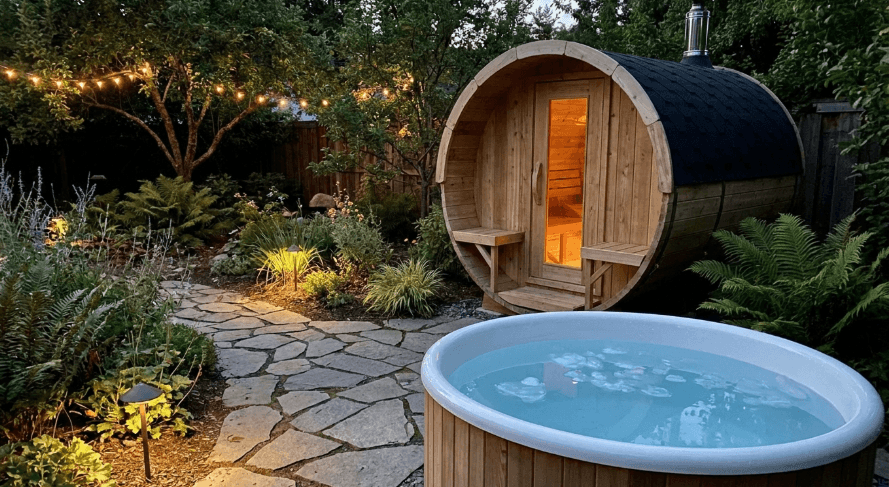
Concrete garage or basement floors need little beyond a moisture barrier or floor mat under the cabin for comfort underfoot. Wood-framed rooms need a level subfloor rated to handle repeated heat and humidity cycling without warping over years of use. Outdoor barrel saunas need the most site prep: a compacted gravel bed or paver pad, typically 4 to 6 inches deep and extending a bit beyond the barrel’s footprint, both for drainage and to keep the cradle from settling unevenly over time.
Getting clearances right
Two clearance numbers matter, and they’re different. Wall clearance for the cabin itself, usually a few inches on the sides and back for ventilation, is the smaller number. Heater clearance, the space required around the heater guard to keep anything flammable or any person from brushing against it, is the larger and more safety-critical number, and it’s specified by the heater manufacturer, not the cabin manufacturer. Confirm both from the actual spec sheets for the exact units you’re buying rather than assuming they match a similar model you’ve seen before.
Outdoor wiring needs its own set of rules
An outdoor barrel sauna’s electrical run has extra requirements a garage install doesn’t. The circuit needs GFCI protection at the breaker or outlet, since code requires ground-fault protection anywhere a circuit could contact moisture, and an outdoor sauna sits right at that intersection of electricity and water exposure. Any conduit or junction box outside has to carry a weatherproof, in-use rating so it stays sealed with the cover open while a cord or connection is plugged in, not just sealed when everything is closed up. Direct burial cable rated for outdoor use is typically required if the run crosses open yard rather than staying on a wall or fence line, and it needs to sit below your region’s frost line to avoid damage from ground movement each winter. An electrician who has done outdoor equipment hookups before, a hot tub or pool pump, for example, will already know these requirements; it’s worth asking directly rather than assuming a general residential electrician defaults to them.
What happens if clearances or wiring are done wrong
Skipping proper heater clearance is the more serious risk, since it’s the leading cause of home sauna fire incidents when it happens, alongside using an incorrectly sized circuit that overheats under sustained load. Beyond the safety issue, a hardwired unit installed without a permit and inspection can complicate a home sale later, when a buyer’s inspector flags unpermitted electrical work. None of this is difficult to get right, it just requires treating the electrical and clearance steps as non-negotiable rather than something to eyeball.
Where to check heater specs before you commit to a plan
Before scheduling an electrician or ordering gravel for a pad, it helps to know the exact heater wattage and amperage you’re working with. Retailers like SweatDecks list heater specs on individual product pages, which is the fastest way to confirm circuit sizing before committing to a layout, rather than guessing and adjusting after the unit arrives.
Why the install quality affects long-term use
A correctly wired, well-vented, properly cleared sauna is simply more pleasant and safer to use often, and frequency is what the research ties to any measurable association with health outcomes. A 2018 review in the American Journal of Physiology on heat and cold exposure found the physiological effects of sauna bathing tied closely to consistent, repeated exposure over time. A 2023 Mayo Clinic Proceedings review found the strongest associations when frequent sauna use was paired with other healthy habits, not used as an occasional novelty. A sauna installed correctly the first time is one that’s actually going to get used that consistently.
Frequently Asked Questions
What amperage does a small hardwired sauna heater need?
A 3kW heater typically needs a 20 to 30 amp 240V circuit; a 6kW unit needs 40 to 50 amps. Always confirm against the nameplate.
Can a sauna sit directly on a concrete garage floor?
Yes. Concrete resists moisture and heat well. Add a barrier or floor mat under the cabin for comfort and wood protection.
How close can a sauna sit to a wall?
Most specs call for a few inches of ventilation gap on the sides, plus a larger clearance zone around the heater guard itself.
Does an outdoor barrel sauna need a permit?
It depends on local code. A hardwired heater almost always triggers a permit; a plug-in unit often doesn’t.
Who should size the electrical circuit?
A licensed electrician should handle final sizing and installation, even if you research the nameplate requirements yourself first.
References
- Effects of heat and cold on health, with special reference to Finnish sauna bathing (American Journal of Physiology, 2018)
- Does the Combination of Finnish Sauna Bathing and Other Lifestyle Factors Confer Additional Health Benefits? A Review of the Evidence (Mayo Clinic Proceedings, 2023)
- Cardiovascular and Other Health Benefits of Sauna Bathing: A Review of the Evidence. Mayo Clinic Proceedings, 2018. https://pubmed.ncbi.nlm.nih.gov/30077204/