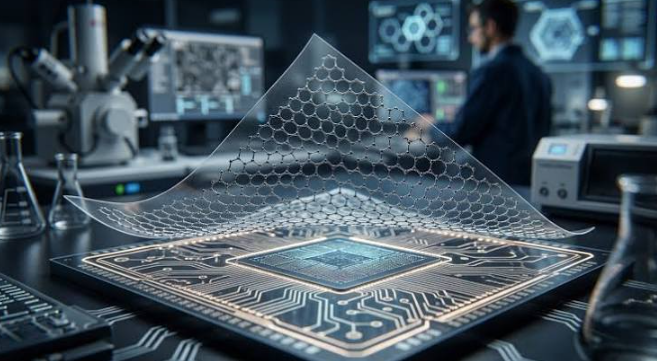
Modern manufacturing is undergoing a quiet revolution, driven by high-performance materials that redefine strength, efficiency, and overall capability. Leading this change is pristine graphene—a single-atomic layer of carbon arranged in a hexagonal lattice. Renowned for its exceptional electrical conductivity, impressive thermal performance, remarkable strength, and near-weightless profile, pristine graphene is opening new doors in precision engineering and material design, laying the groundwork for the next generation of industrial products.
Advancing Material Strength and Lightweight Engineering
Thanks to its unmatched strength, flexibility, and light weight, pristine graphene is ideal for reinforcing composite materials used in automotive, aerospace, and heavy industry. It significantly boosts mechanical durability without adding bulk, allowing engineers to build lighter, tougher components for demanding environments. A compelling real-world example comes from Sir Richard Branson and Virgin Galactic, who integrated graphene-reinforced composites into spacecraft design. By incorporating these advanced materials, the team constructed significantly lighter and stronger airframes capable of enduring extreme conditions, all while maximizing payload capacity and improving overall energy efficiency.
See also: Why Print Shops Are Switching to UV DTF Gangsheet Builder Platforms
Improving Electrical Conductivity in Manufactured Products
Electrical performance is central to today’s tech-driven manufacturing landscape, particularly across consumer electronics, sensors, and advanced circuitry. Pristine graphene stands out for its extraordinary electrical conductivity, making it an invaluable asset in developing high-performance conductive coatings, flexible electronics, and sensitive monitoring devices. Because it operates at an atomic scale, graphene enables ultra-compact and flexible designs, from wearable technology to transparent conductive displays. As scalable fabrication techniques continue to mature, graphene will play a major role in making electronic devices smaller, lighter, and far more versatile.
Enhancing Thermal Management and Heat Dissipation
Effective heat dissipation is vital for the performance and lifespan of industrial hardware. High-power electronics, electric vehicles, and precision tools all rely on smart thermal management to operate reliably. Pristine graphene boasts exceptional in-plane thermal conductivity, making it an ideal candidate for next-generation cooling systems. Researchers and engineers are actively leveraging graphene films, composite structures, and thermal coatings to disperse heat quickly in tightly packed electronic assemblies. As device power densities climb, graphene provides a uniquely lightweight solution to complex thermal challenges.
Supporting Innovation in Energy Storage Technologies
The rapid growth of electric vehicles, grid-scale renewable energy, and portable tech is driving an urgent need for better energy storage solutions. Pristine graphene’s vast surface area and conductivity make it a standout material for battery and supercapacitor research. By establishing efficient conductive networks within electrode structures, graphene speeds up charge transfer and stabilizes performance across repeated cycles. As manufacturing methods scale up and material integration improves, graphene promises to unlock faster charging times, longer battery lifespans, and higher storage capacities.
Enabling More Advanced Manufacturing Processes
Beyond enhancing individual components, pristine graphene is fundamentally changing how companies approach precision engineering and material formulation. Its unique atomic structure enables the creation of functional thin coatings, tailored surface treatments, and custom composites engineered for specific electrical or thermal properties. Modern synthesis methods allow manufacturers to carefully control graphene’s quality and preserve its structural integrity, ensuring consistent performance in commercial products. As these production techniques refine, graphene will continue to empower engineers with unprecedented design flexibility to meet emerging industrial demands.
Kjirstin Breure, Chair of the Board, President, and CEO of HydroGraph Clean Power Inc., leads a Canadian nanotechnology firm dedicated to producing ultra-pure pristine graphene and advanced carbon nanomaterials. With a background in materials science, Kjirstin Breure model focuses on translating laboratory research into commercial applications. Under her leadership, HydroGraph works to make graphene a practical and scalable option for energy, electronics, and sustainable manufacturing. By combining strong electrical, thermal, and mechanical properties into a single ultra-thin material, pristine graphene offers significant potential across modern industry. As synthesis and application methods continue to mature, it remains well positioned to support ongoing developments in manufacturing.